Lake Nakuru National Park, located in central Kenya about 140 km northwest of Nairobi , is a picturesque park centered around a shallow, alkaline lake . Established in 1968 as Kenya’s first national park dedicated to bird conservation , it covers an area of approximately 188 square kilometers . The park is famous for its incredible birdlife, successful rhino sanctuary, and diverse habitats ranging from the lake shore to rocky cliffs and woodlands .
🦩 Key Features and Wildlife
-
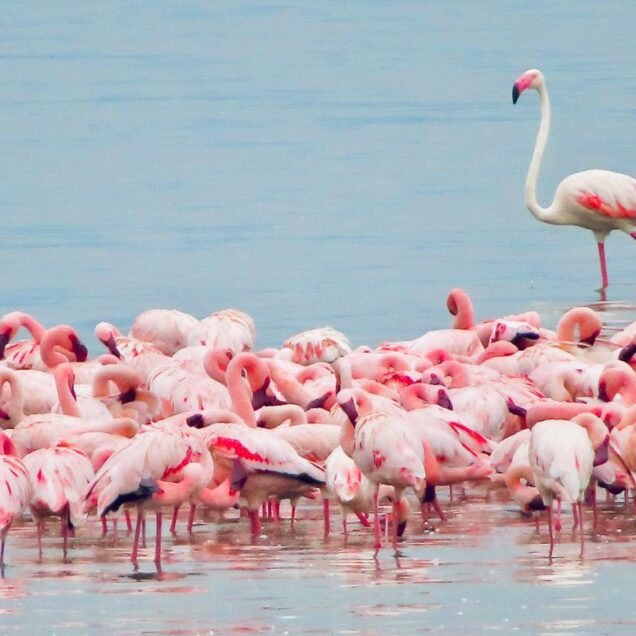
A Haven for Birds (Especially Flamingos): The park is globally recognized for its extraordinary avian population, with over 450 bird species recorded . It was famously known as the home of millions of lesser and greater flamingos, whose vibrant pink feathers once created a “pink garland” along the shores, a sight described as a “peerless romantic spectacle” . Their diet of blue-green algae, rich in carotenoids, gives them their iconic color . Note: In recent years, due to rising water levels and changing ecological conditions, large flamingo flocks have largely moved to other Rift Valley lakes, though they can sometimes still be seen .
-
A Premier Rhino Sanctuary: Lake Nakuru was Kenya’s first rhino sanctuary and remains one of the best places in East Africa to see both black and white rhinos . White rhinos, being grazers, are often easily spotted on the plains .
-
Diverse Mammals: The park is home to a variety of other wildlife, including the rare Rothschild’s giraffe, zebras, waterbucks, lions, leopards, and buffaloes . It is one of the few parks where you can find four of the “Big Five” (elephants are absent) .
-
Scenic Landscapes: The park offers stunning views of the lake and surrounding landscapes from vantage points like Baboon Cliff and Lion Hill . The lake itself is surrounded by rocky hillsides, grasslands, and unique vegetation, including the largest Euphorbia candelabrum forest in Africa and woodlands of yellow-barked acacia (fever trees) .
💡 Conservation and Practical Information
-
Conservation Status: The park is a designated Ramsar Site (wetland of international importance) and an Important Bird Area . It is fully enclosed by an electric fence to protect the wildlife within . The park faces ongoing challenges from industrial pollution, deforestation in its water catchment areas, and the need to manage the ecological balance within its fenced boundaries .
-
Activities: The park is ideal for game drives, bird watching, and picnics . A popular annual event is the “Cycle with Rhino” event held every September .
-
Best Time to Visit: While the park can be visited year-round, the best wildlife viewing is generally during the dry season from June to March, when animals congregate near water sources . The wettest months (April and May) can make game drives more difficult but offer lush, green scenery .
-
Getting There: It’s a 3.5-hour drive from Nairobi or a short flight to the Naishi airstrip within the park .